

Citrix vs browser delivery for Oracle Forms: where cost hides in onboarding, incidents, external access, and operational friction.
If you’re a CIO or IT manager, you’ve probably heard some version of this: “Citrix works. Oracle Forms works. Why touch it?” And that’s fair, both can work. The real question isn’t whether users can open the application. The question is what you keep paying for every month in hidden friction: onboarding time, repeated endpoint incidents, external-user access complexity, and the operational overhead of keeping a desktop-style delivery model alive.
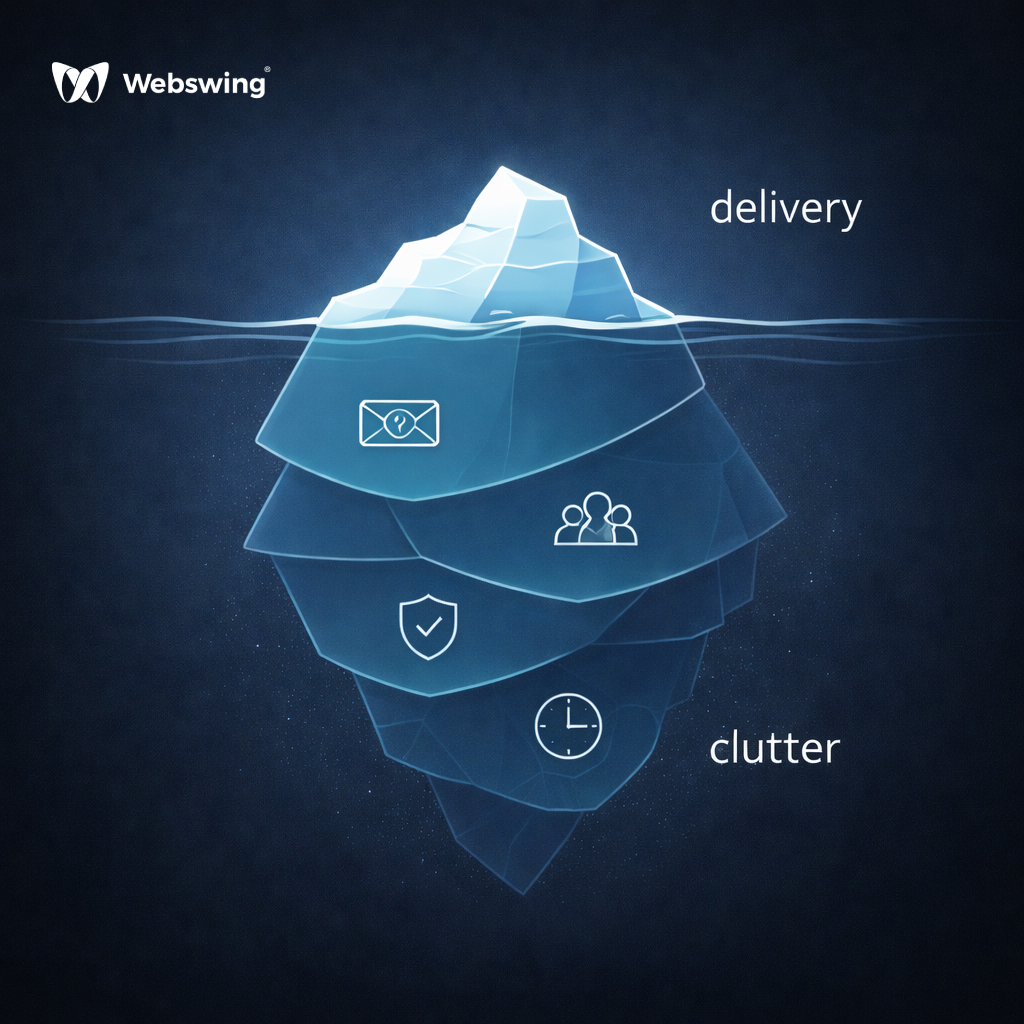
In most Oracle Forms estates, the ROI discussion is rarely about “saving Oracle licenses.” The returns usually come from something more practical: reducing delivery friction while keeping proven logic intact and creating a safe, staged path to modernisation when you’re ready.
For a quick baseline of what we mean by browser delivery, our Webswing for Oracle Forms page explains the model clearly: Oracle Forms runs server-side and is delivered as HTML5 in any browser. No Java client, no FSAL/JWS, no plugins. With enterprise-grade operations built in.
The cost isn’t in the Oracle license
The cost you feel is usually around Oracle Forms, not inside it.
Citrix/VDI is often introduced as a “delivery stabiliser”: it standardises runtime conditions, reduces endpoint variability, and gives you central control. But it also adds a full layer of infrastructure, operational processes, and user-handling complexity that shows up as budget line items and, more importantly, as people-hours.
Browser delivery shifts the shape of the cost. With Webswing, the runtime moves to a controlled server tier and the endpoint becomes “just a browser.” That doesn’t remove every cost, but it tends to reduce the ones that quietly grow the fastest: endpoint troubleshooting, environment drift, and access friction.
Where the real cost hides
A simple decision-maker lens that works well is to look for layers of friction that repeat and then scale automatically as your user base grows.
Onboarding friction
Every additional step between “new user” and “productive user” has a cost. With Forms delivered through Citrix/VDI, onboarding often includes more moving parts: access provisioning, client setup, profiles, policies, connectivity, and support hand-holding. The friction becomes especially visible when you onboard temporary staff, partners, contractors, or auditors.
With browser delivery, the endpoint requirement is reduced to one thing: a standard browser. Webswing’s Oracle Forms approach is explicitly built around that: run in any browser, on any device, Java-free.
Endpoint incidents and “it broke again”
The most expensive incident category is not the rare outage. It’s the repeated, small desktop issues that keep coming back: local Java drift, launchers, security prompts, inconsistent environments, and the long tail of “unique machines.”
This is why Webswing is positioned as no Java client, no FSAL/JWS, no plugins, while still preserving the application logic. You reduce the number of variables on the endpoint and move control into the server tier.
External users and occasional access
VDI/Citrix is often justified by edge cases: external users, occasional users, mobile access, or high-security segments. Those cases are real, but they’re also where VDI cost tends to balloon because you’re provisioning a heavy solution for light usage.
Webswing’s model is designed to handle browser-first access without client installs across platforms. And again, without touching your Forms code.
Change management and speed of rollout
A delivery layer that’s hard to change becomes a tax on every improvement. If every update requires desktop-level coordination, you’ll modernise less, patch slower, and accept “status quo” longer than you want to.
With Webswing, the operational goal is to treat Forms like a centrally managed service - SSO, reverse proxy, auditing, metrics, clustering - so rollout and governance behave like your other web systems.
When Citrix and VDI is the right tool
Citrix/VDI can be the right strategy when you truly need full desktop virtualisation, strict isolation, or you’re standardising a broad portfolio of applications behind one delivery model. In those scenarios, the value is not “Forms specifically”. It’s the desktop virtualisation layer and the controls it provides.
The question is whether your Oracle Forms delivery challenge actually requires that entire stack.
If your primary goal is reliable Oracle Forms access without endpoint chaos, it’s worth evaluating whether you’re paying for capabilities you don’t need day-to-day: desktop session management, heavy client profiles, added infrastructure layers, and the operational load that comes with them.
Webswing is a more targeted approach. It's designed to deliver legacy Java UI applications (including Oracle Forms) directly in the browser with a central operating model, so you can simplify the footprint while keeping governance strong. You can also validate this in small steps because rollout can start with one environment and one user group, then scale.
What browser delivery actually gives you
With Webswing for Oracle Forms, the outcomes decision makers typically care about are:
- A simpler endpoint story - Users need only a browser. No local Java, no launchers, no plugins.
- A predictable operating model - Webswing is built for enterprise operations: reverse proxy and identity integrations, monitoring, and clustering for scale and availability.
- A better modernisation posture - You can run Forms alongside modern web modules in a single browser experience and evolve step-by-step instead of forcing a risky rewrite.
And importantly: you’re not forced into a rewrite just to improve delivery.
If you want to see how we structure the step-by-step journey, the Webswing Modernisation Framework lays out the approach clearly: web-enable first, then extend/facelift, and rebuild only where it truly makes sense.
No code changes does not mean no work
This is where we stay honest.
You still need to validate real workflows. Especially printing, file exchange, and anything that touches the local machine. Webswing is explicit about browser sandbox constraints, including local filesystem/device access and certain WebUtil scenarios, in the Support & limitations section of Webswing for Oracle Forms.
That’s why the smartest ROI projects start with a small pilot: validate the top workflows, identify the WebUtil/local-integration edge cases, and agree on patterns that fit your environment.
If you already know you have deep OS-level integrations, the fastest way forward is to align on patterns together via Live demo scheduling or the Oracle Forms contact channel.
A simple ROI model you can take into a steering committee
If you need a clean, defensible internal narrative, use this structure:
- Reduce delivery friction first
- Stabilise access via browser delivery and central operations.
- Measure operational impact
- Track onboarding time, ticket volume, time-to-resolution, and time-to-rollout.
- Modernise iteratively instead of rewriting
- Use a phased framework so every step creates value and reduces risk. The Webswing Modernisation Framework is built for exactly this conversation.
That’s how you get ROI without pretending you’re saving Oracle licenses.
Credibility for complex Oracle Forms estates
We built Webswing Oracle Forms support for real-world estates, and we maintain a partner ecosystem for customers who want additional depth and local delivery capacity. You can see our ecosystem on the Webswing Partners page, including Cologne Data.
If WebforJ is part of your preferred stack for building modern Java web modules alongside legacy systems, the integration approach is outlined in WebforJ with Webswing.
Next steps
If you want to make an informed decision between Citrix/VDI and browser delivery for Oracle Forms, the fastest next step is a focused pilot discussion: your user groups, your workflows, your WebUtil/local integration reality, and your target operating model.
- Start with Webswing for Oracle Forms
- Get the latest release from Webswing Downloads
- Align internally with the Webswing Modernisation Framework
- Review options on Webswing Licensing
- Book time via Live demo scheduling
- Or reach us through the Oracle Forms contact form
arrow_back_ios